
FlowForge
정량 펌프 선택 방법
산업용 약품 주입·계량 구매 가이드: 연동, 다이어프램, 플런저 펌프의 차이, 정확도와 턴다운의 의미, 배압과 내화학성이 선택을 좁히는 방식, 교정 방법. 제품 라인은 연동 및 정량 카탈로그 페이지에 있으며, 이 가이드는 먼저 방식을 고르도록 돕습니다.
What a dosing pump does
Small, controlled volumes
A dosing pump (also called a metering pump) adds a set volume of a liquid, such as a chemical additive, at a set rate. Water treatment, process chemistry and OEM equipment use them. The peristaltic and dosing product line lists our catalog models; this guide helps you choose the type first.
Four questions narrow the choice
What is the fluid? What flow range, and how wide a range (turndown)? What back-pressure is at the injection point? How accurate must the dose be? The rest of this page works through those.
Peristaltic, diaphragm and plunger dosing pump types
Peristaltic
Rollers squeeze a flexible tube so only the tube touches the fluid. Gentle on shear-sensitive fluids, self-priming, and a quick tube change. Pressure is limited by the tube rating.
Diaphragm (solenoid and motor-driven)
A diaphragm flexes in a pump head and a stroke length and rate set the dose. It handles higher pressure than a tube pump and suits chemical dosing. See the diaphragm pump page for materials and air-operated types.
Plunger (piston)
A plunger moves in a cylinder to displace a fixed volume. It handles high pressure and gives repeatable dosing, but needs seals or packing that wear and a clean fluid.
Thick fluids
For viscous or abrasive fluids where steady flow matters, see progressive cavity pumps.
Choosing on accuracy, turndown and back-pressure
Accuracy
Accuracy is stated at a given flow, pressure and fluid. Stroke-based pumps give a repeatable volume per stroke. Tube pumps track speed, and tube wear and back-pressure shift the result. Verify on a calibration run.
Turndown
Turndown is the ratio of maximum to minimum flow a pump can hold accurately. A pump sized close to its maximum has less room to adjust, so pick a pump whose range covers your low and high dose.
Back-pressure
Pressure at the injection point decides which types qualify. State the maximum line pressure. Add an anti-siphon or back-pressure valve when the line is lower than the tank or can siphon.
Chemical compatibility
Tube polymer, diaphragm, ball, seat and head materials must suit the fluid, concentration and temperature. We quote materials from your fluid list. For process chemistry see the chemical and process line.
Calibration
Weigh or graduate a timed catch at the working flow and pressure, then set the pump. Repeat after a tube or diaphragm change. See the peristaltic calibration guide for the method.
Dosing pump selection checklist
Send these fields on the inquiry form. The pump spec guide has the general RFQ brief.
Fluid
Chemistry, concentration, viscosity and an SDS if you have one.
Dose range
Minimum and maximum flow, and continuous or pulse duty.
Back-pressure
Maximum line pressure at the injection point and any siphon risk.
Accuracy
Required accuracy and how you will verify it.
Temperature
Fluid and ambient temperature.
Control and supply
Analog, pulse or manual control, voltage and frequency.
Peristaltic vs diaphragm vs plunger dosing pump
A general comparison. The right type depends on the fluid and the pressure. Catalog models are on the peristaltic and dosing line.
| Topic | Peristaltic | Diaphragm | Plunger |
|---|---|---|---|
| Pressure | Limited by tube rating. | Moderate to high, depending on the head. | High. |
| Accuracy | Tracks speed; tube wear and back-pressure shift it. | Repeatable volume per stroke. | Repeatable volume per stroke. |
| Pulsation | Pulses with each roller pass. | Pulses with each stroke. | Pulses with each stroke. |
| Fluid contact | Tube only. | Diaphragm, valves and head. | Plunger, seals and valves. |
| Solids and abrasives | Tolerates fine solids; abrasives wear the tube. | Fine solids can hold valves open. | Needs a clean fluid. |
| Maintenance parts | Tube. | Diaphragm, check balls and seats. | Seals or packing, plunger and valves. |
| Self-priming and dry run | Self-priming; tolerates dry running. | Self-priming to a limit; check the model. | Needs priming; avoid dry running. |
Dosing line models in the catalog
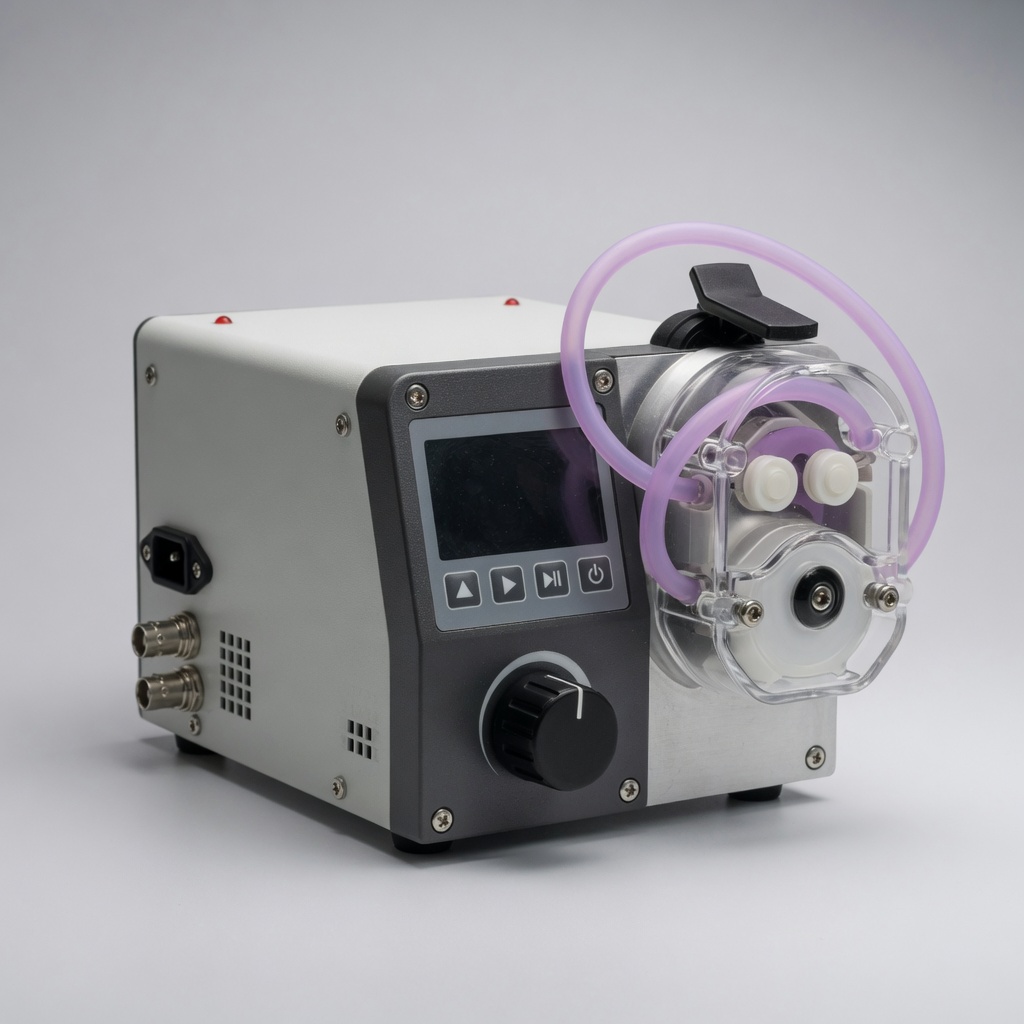
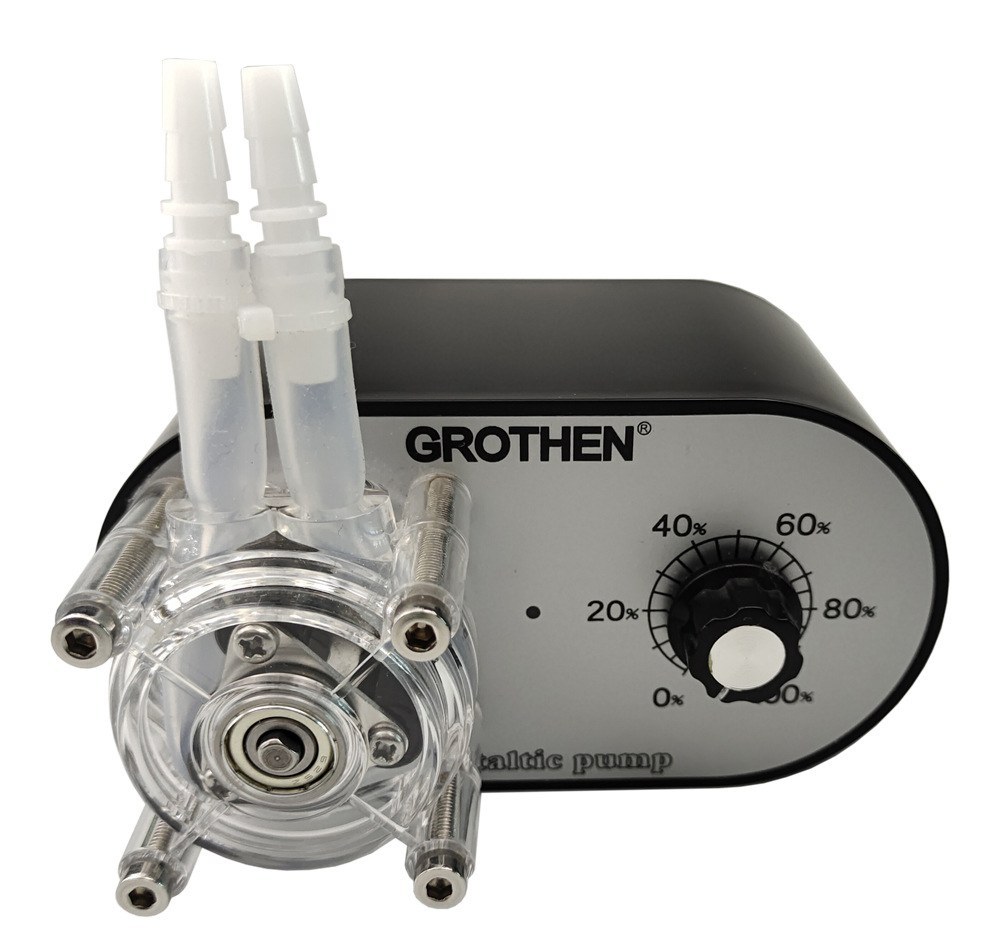
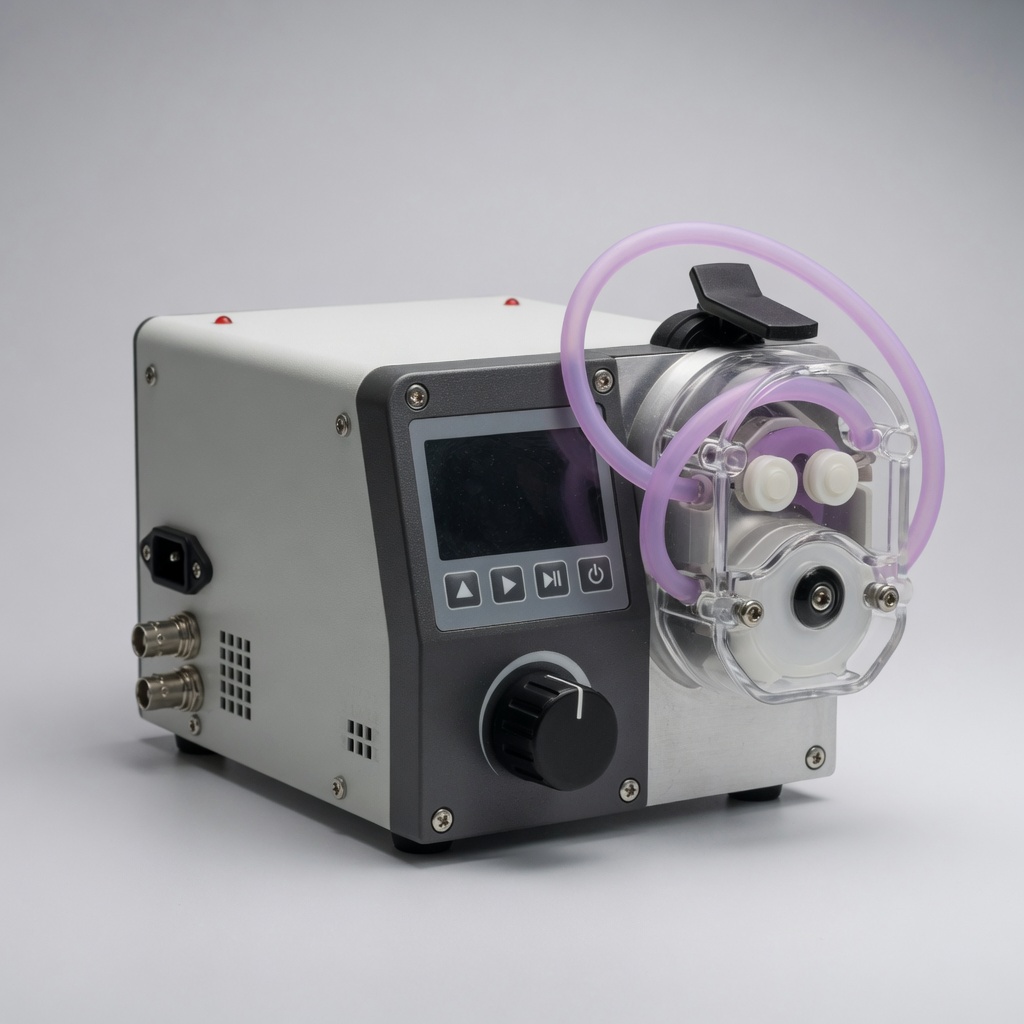
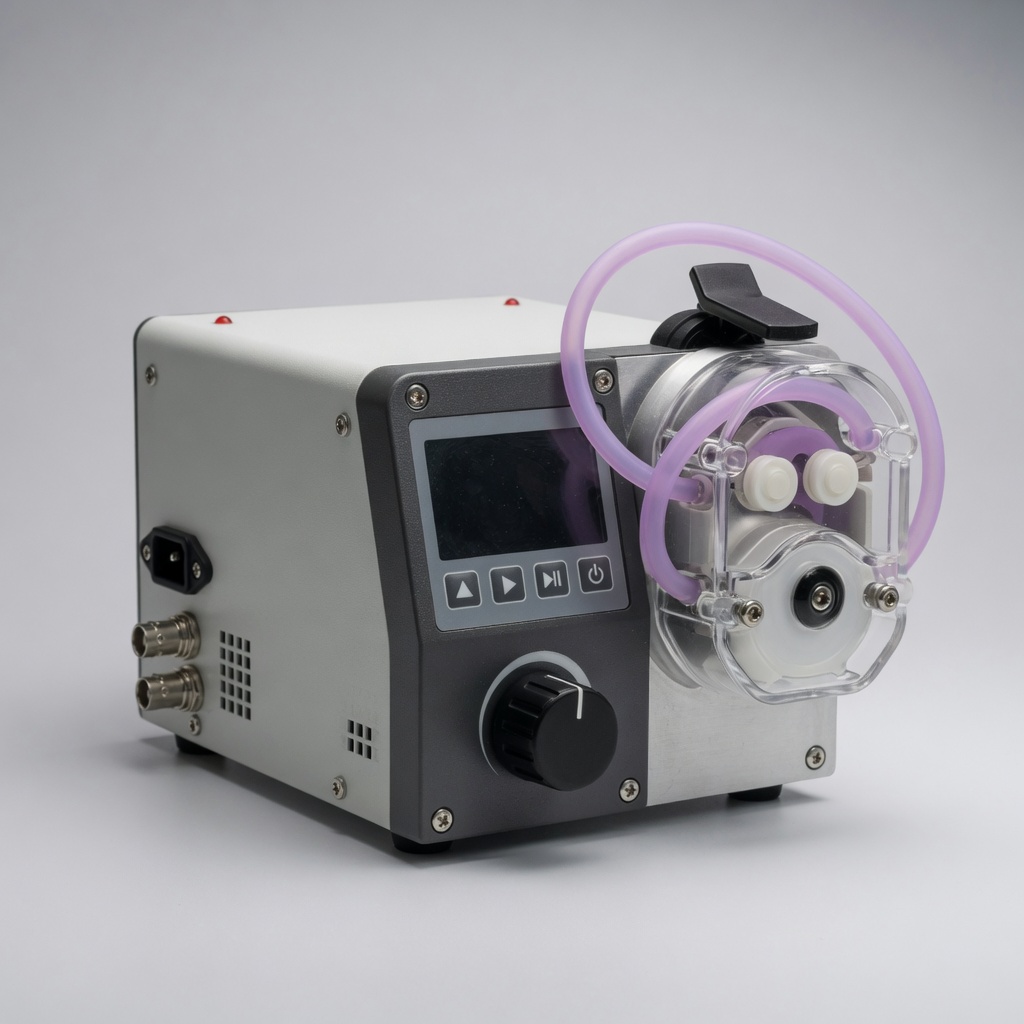
Studio reference images; quote and options follow your duty sheet.
Two ways to buy
OEM and private label
Need dosing pumps under your own brand or built to your drawing? Start from a duty sheet. See Custom OEM for options and the private-label hub for nameplate, housing and packaging.
Wholesale crate lots
Buying catalog dosing models or spare tubes and diaphragm kits in lots? The wholesale hub covers crate lots and spares. MOQ is quoted by SKU, not as a site-wide number.
Dosing pump FAQ
What is the difference between a dosing pump and a metering pump?
The terms are used for the same job: adding a controlled volume of liquid at a set rate. "Metering pump" is common for stroke-based diaphragm and plunger types, "dosing pump" is common in water treatment.
Which dosing pump type is the most accurate?
Accuracy depends on the pump, the flow setting, the back-pressure and the fluid more than on the type alone. Stroke-based types give a repeatable volume per stroke; confirm any type on a calibration run.
What is turndown?
Turndown is the ratio between the highest and lowest flow a pump holds accurately. A wide turndown lets one pump cover a wide dose range.
When should I choose a peristaltic dosing pump?
When the fluid is shear-sensitive, you want only one wetted part, or a quick tube change matters. Pressure is limited by the tube. See the peristaltic and dosing line.
Do you publish prices for dosing pumps?
No. Price depends on wet-end materials, flow range, control and volume, so we quote from a duty sheet. Send it on the inquiry form. OEM and wholesale are covered by private label and wholesale.
펌프 공장 견적이 필요하신가요?
유체, 듀티 시트 또는 SKU, 수량, 국가를 보내 주세요. 영업일 보통 24시간 내.