
FlowForge
프로그레시브 캐비티 펌프 종류와 OEM 공급
구매 담당자를 위한 쉬운 가이드: 로터와 스테이터가 맥동 없이 유체를 이송하는 방식, 고점도·연마성·전단 민감 유체 적합성, 스테이터 엘라스토머 선택, 연동 및 다이어프램 펌프와의 비교. 사양서 기준 견적이며 공개 단가는 없습니다.
How a progressive cavity pump works
Rotor and stator
A metal rotor with a single helix turns inside a stator with a double helix, usually molded from elastomer. Where they meet they form sealed cavities that move along the pump from suction to discharge as the rotor turns.
Positive displacement with steady flow
Each turn moves a fixed volume, so flow follows pump speed. The cavities move continuously instead of in strokes, so flow is steady and non-pulsating. That is why it is chosen where pulsation would disturb a process or a meter.
Where a progressive cavity pump fits
Viscous and shear-sensitive media
It handles thick fluids and moves them with low shear, so it suits pastes, sludges and fluids that break down under high shear.
Solids and abrasives
Particles that fit the cavity pass through. Abrasives wear the stator, so stator life depends on solids content and speed. Share particle size on the RFQ.
Dosing and metering
Flow tracks speed and is steady, so the pump is used for metered feed of viscous fluids. Slip rises with pressure and wear, so calibrate on your fluid. For tube-based dosing see the peristaltic pump hub.
Chemical, wastewater and food-grade-capable cases
Used for chemical feed, wastewater sludge and viscous food-type products. Food-grade-capable designs exist, but we make no certification claim here; documentation follows the SKU on the PO. For chemical duty see the chemical and process line.
Choosing the stator elastomer
NBR
A common general-purpose choice for water-based fluids, oils and many greases. Not suited to strong oxidizing chemicals.
EPDM
Good with water, many dilute acids and alkalis and steam-cleaned lines. Not suited to oils and most hydrocarbons.
FKM
Higher temperature range and wider chemical resistance, including many oils and fuels. Some strong alkalis and amines attack it.
Confirmed from your fluid list
Chemistry, concentration, temperature and solids decide the stator and rotor material. We quote from the fluid list and do not publish unverified compatibility percentages.
Dry-run caution
The stator depends on the pumped fluid for lubrication and cooling. Running dry can burn the stator within a short time, so specify dry-run protection and keep the pump primed.
Progressive cavity pump selection checklist
Send these fields on the inquiry form. The pump spec guide has the general RFQ brief.
Fluid and viscosity
Chemistry, viscosity at operating temperature, and an SDS if you have one.
Flow and pressure
Target flow, discharge pressure and suction conditions.
Solids
Particle size, content and abrasiveness.
Temperature
Operating and peak temperature; it limits the stator choice.
Duty
Continuous or intermittent, and whether a hopper or feed system is needed.
Drive and voltage
Motor voltage, phase and frequency, and any speed control.
Progressive cavity vs peristaltic vs diaphragm pump
All three are positive-displacement pumps. Which fits depends on the fluid and the job. See the peristaltic pump hub and the diaphragm pump hub for the other two types.
| Topic | Progressive cavity | Peristaltic | Diaphragm |
|---|---|---|---|
| Pulsation | Steady, non-pulsating flow. | Pulses with each roller pass. | Pulses with each stroke, strongest on air-operated units. |
| Viscosity range | Handles very thick fluids. | Handles viscous fluids within the tube and pressure limits. | Moderate; thick fluids reduce flow and need larger valve passages. |
| Solids | Passes particles that fit the cavity; abrasives wear the stator. | Passes solids that fit the tube bore; abrasives wear the tube. | Air-operated units pass solids up to the valve passage size. |
| Self-priming | Self-priming when the stator is wetted. | Self-priming and tolerant of dry running. | Self-priming; dry lift depends on model. |
| Maintenance parts | Stator and rotor, plus joints and shaft seal. | Tube is the main wear part. | Diaphragms, check balls and seats. |
| Accuracy | Flow tracks speed; slip rises with pressure and wear. | Flow tracks speed; tube wear and back-pressure shift it. | Metering types give repeatable volume per stroke. |
| Chemical compatibility | Set by the stator elastomer and rotor metal. | Set by the tube polymer. | Set by the diaphragm, ball, seat and body materials. |
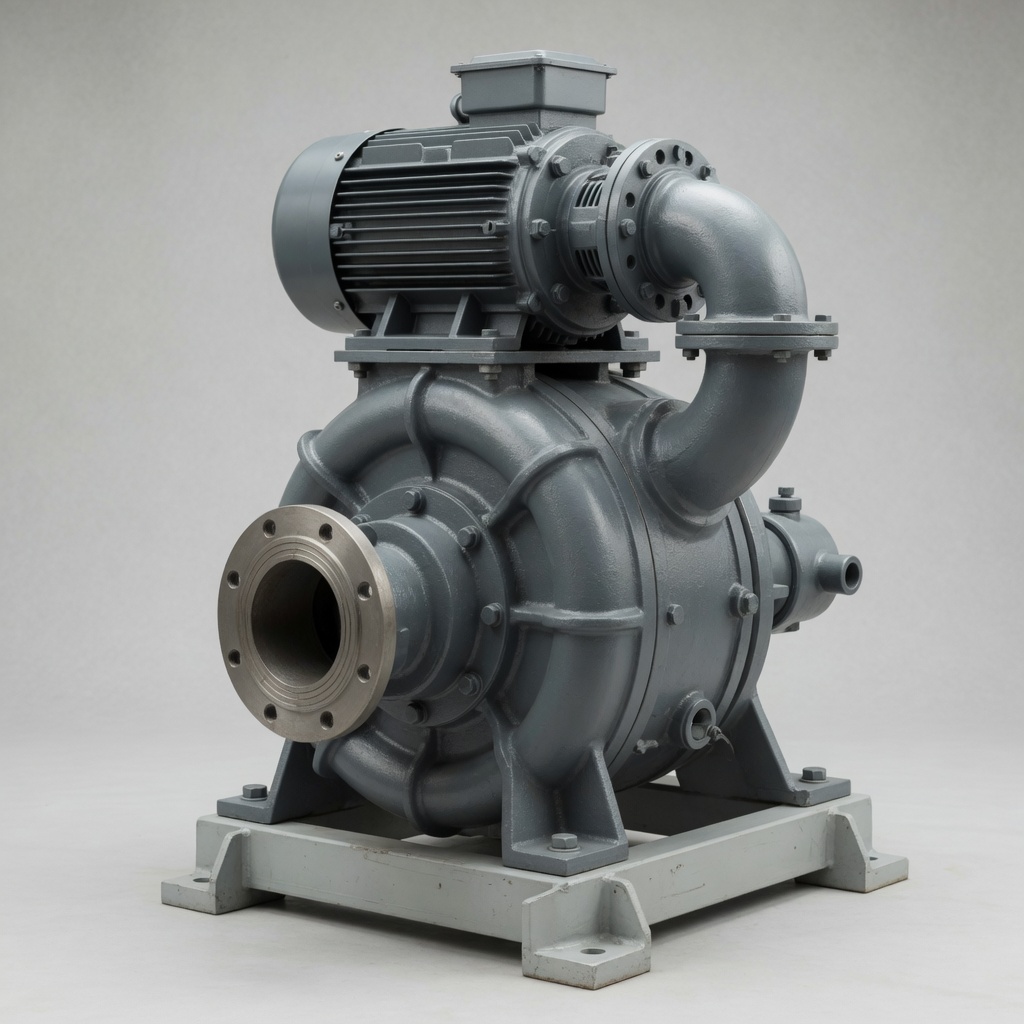
Progressive cavity SKU in the catalog
Studio reference image; quote and options follow your duty sheet.
Two ways to buy
OEM and private label
Need progressive cavity pumps under your own brand or built to your drawing? Start from a duty sheet. See Custom OEM for options and the private-label hub for nameplate, housing color and packaging.
Wholesale crate lots
Buying the catalog progressive cavity SKU or spare wet-end parts in lots? The wholesale hub covers crate lots and spares. MOQ is quoted by SKU, not as a site-wide number.
Progressive cavity pump FAQ
What is a progressive cavity pump used for?
Moving viscous, abrasive or shear-sensitive fluids at a steady flow, and metered feed of thick fluids. Typical fluids include pastes, sludges and viscous chemicals.
Is the flow really non-pulsating?
Flow is steady because the cavities move continuously. There can be a small residual variation, much smaller than the pulsation of diaphragm or peristaltic pumps.
Can a progressive cavity pump run dry?
No. The stator relies on the fluid for lubrication and cooling, and running dry can damage it quickly. Fit dry-run protection and keep the suction flooded or primed.
Which stator elastomer should I choose?
NBR suits water-based fluids and many oils, EPDM suits water and dilute acids and alkalis but not oils, and FKM suits higher temperature and many oils and chemicals. The final choice comes from your fluid list and temperature.
When is a peristaltic or diaphragm pump the better choice?
A peristaltic pump suits fluids that must touch only the tube and need quick tube changes. A diaphragm pump suits solids, higher pressure and air-driven duty. Choose progressive cavity when steady flow and thick fluid matter most.
Do you publish prices, and can you supply OEM or wholesale?
No public prices; we quote from a duty sheet on the inquiry form. OEM work and crate lots are available. See private label and wholesale.
펌프 공장 견적이 필요하신가요?
유체, 듀티 시트 또는 SKU, 수량, 국가를 보내 주세요. 영업일 보통 24시간 내.